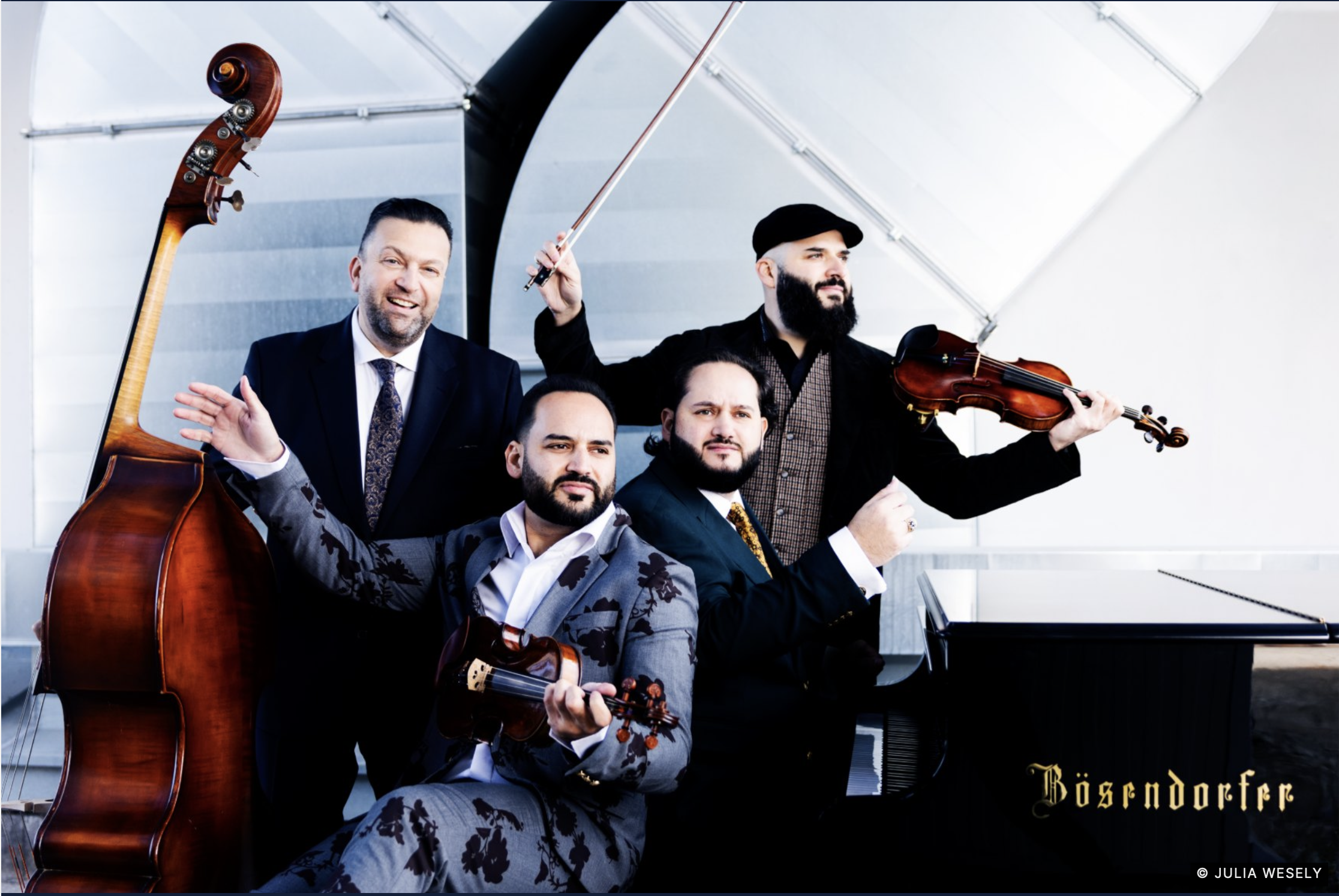
Founded in Vienna in 2013, the Janoska Ensemble brings together classical artistry, imaginative arrangements and the freedom of improvisation. Their distinctive musical language — known as “Janoska Style” — draws on classical music, jazz, popular music and a musical heritage passed down through generations. At the heart of their performances is a spirit of discovery. Familiar melodies take unexpected turns, musical traditions meet, and carefully crafted arrangements open into spontaneous invention. Virtuosity, humour and the close interplay between the four musicians create a concert experience shaped by a lively exchange with the audience. The ensemble has appeared at internationally renowned venues including New York’s Carnegie Hall, the Sydney Opera House, Amsterdam’s Concertgebouw and Vienna’s Musikverein. Their recordings for Deutsche Grammophon include Janoska Style, Revolution, The Big B’s and The Four Seasons, with their first two albums achieving gold status.
Artists
The ensemble & repertoire
The Janoska Ensemble unites three brothers from Bratislava — violinists Ondrej and Roman Janoska and pianist František Janoska — with their brother-in-law, double bassist Julius Darvas. Building on seven generations of music-making in the Janoska family, the four musicians combine individual artistic personalities with an instinctive understanding of one another. Their repertoire ranges from Vivaldi, Bach, Beethoven and Brahms to the music of the Beatles, alongside original compositions and arrangements. Concert programmes include The Four Seasons, The Big B’s, Revolution, Janoska Style and The Big Mulatság. Through Janoska Style Goes Symphonic, their musical approach also extends to collaborations with orchestras.
Artistic & strategic context
The artistic identity of the Janoska Ensemble centres on improvisation as a living part of classical performance. Their interpretations explore how established works can inspire new musical ideas while retaining a close connection to their original character. This approach creates a meeting point between the precision of classical chamber music and the spontaneity of a live musical conversation. Contrasting styles, unexpected variations and moments of humour invite audiences to encounter familiar repertoire from a different perspective. Alongside their concert performances, the ensemble shares its approach through workshops and masterclasses, encouraging musicians to develop confidence in improvisation within a classical context. Their work connects performance and education through the same artistic principle: music as an open, creative exchange.

Representation in Hungary
- SAM Simon Art Management · Richard Simon
- Concert enquiries and artistic collaborations: info@richardsimon.eu