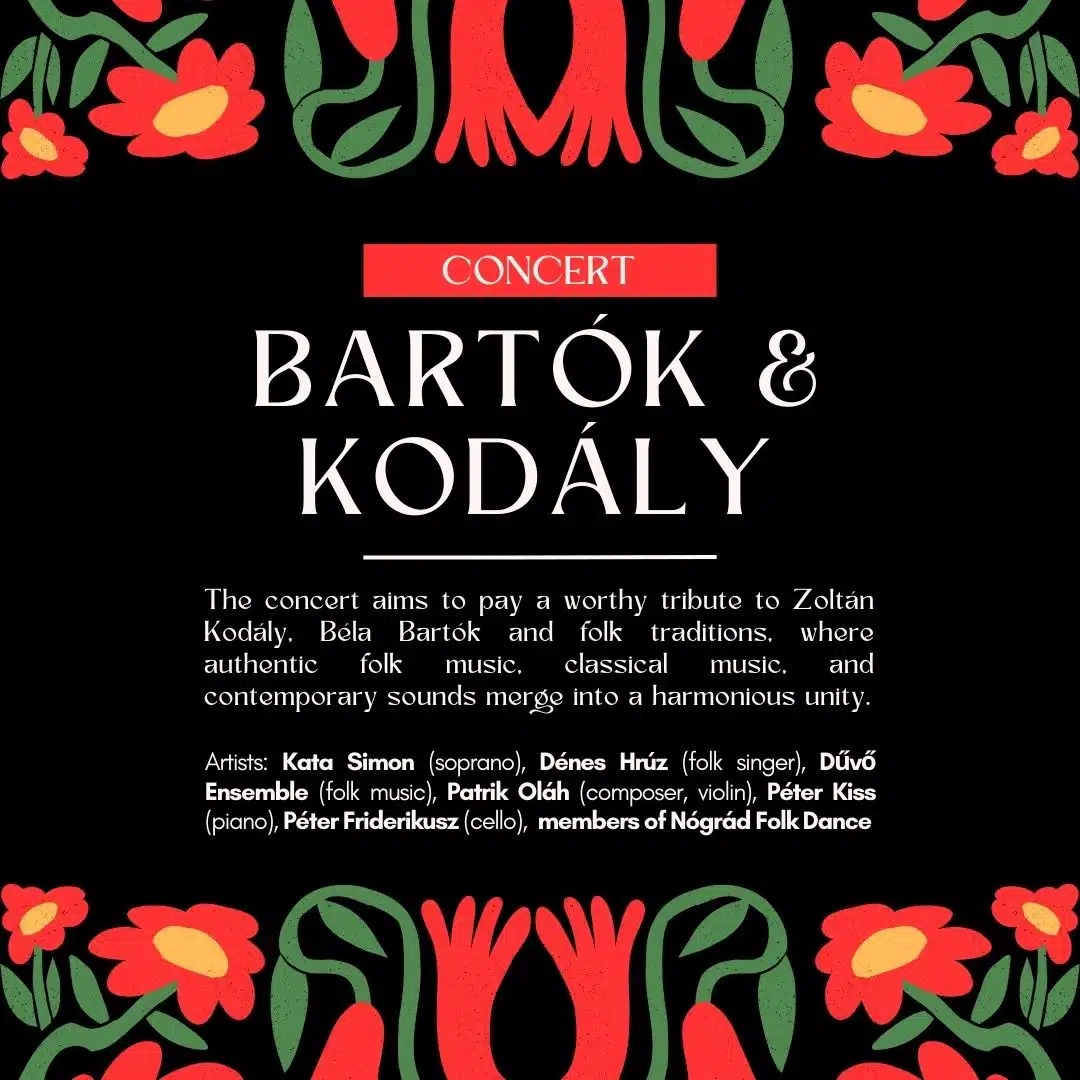
The Bartók-Kodály concert is an artistic project that places the legacy of two defining 20th-century Hungarian composers into an international context. The programme aims to present this repertoire through a contemporary perspective, making it relevant to today’s audiences. The project creates a bridge between Central European musical heritage and the modern concert landscape. The project seeks to reposition the works of Bartók and Kodály within the international concert scene. It highlights the relationship between cultural identity and a universal musical language. Through this approach, it contributes to strengthening the international presence of Hungarian music. The programme is built on a balance between tradition and contemporary interpretation, offering a renewed perspective on well-known works. The concept emphasises both the structural clarity and emotional depth of the music through a modern performative approach. The aim is to create a refined yet powerful concert experience.
Artists
Cast & Creative Team
Kata Simon - producer, soprano
Patrik Oláh - composer, violin
Artist to be announced. - folk singer
Artist to be announced. - violin
Artist to be announced. - bass
Artist to be announced. - viola
Artist to be announced. - piano
Artist to be announced. - cello
Artistic & strategic context
The project is particularly compelling from a managerial perspective due to its strong artistic identity and clear international positioning potential. It is well suited for major European venues and festivals, while also offering strong appeal for Asian markets such as Indonesia, Japan, South Korea and China. Its concept-driven approach and cultural distinctiveness make it highly adaptable for international touring and long-term institutional collaborations.
Why is this concert interesting and meaningful?
- This concert is meaningful because it brings Central European musical heritage into an international context.
- It offers a concept-driven approach that goes beyond a traditional concert format.
- The programme highlights the relevance of cultural identity within a universal musical language.
- It connects historical repertoire with contemporary artistic interpretation in a fresh way.
- It creates opportunities for international presentation and cross-cultural dialogue.